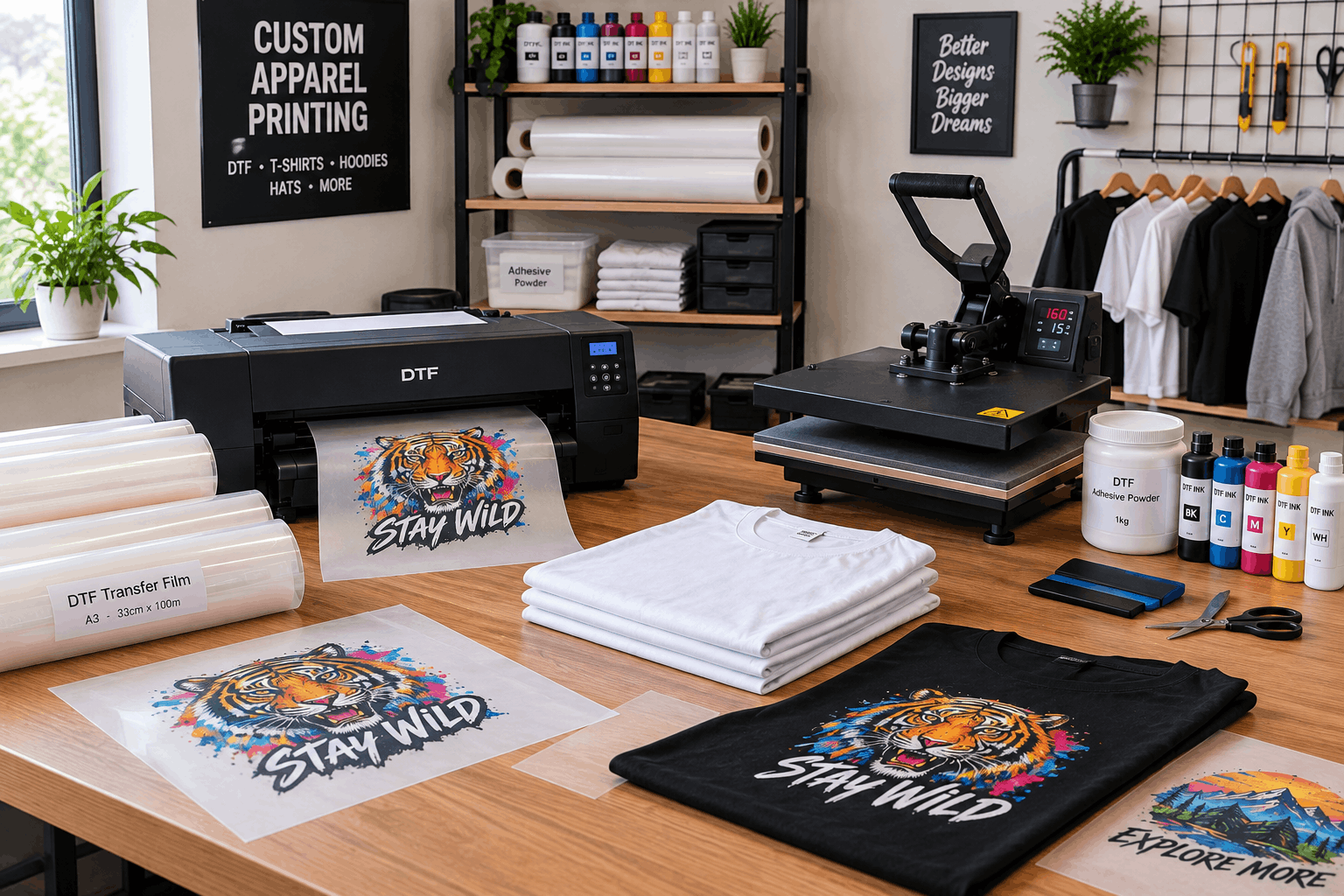
DTF printing for small businesses is a digital apparel-decoration method that prints artwork onto a special PET film before transferring the design onto a garment with heat and pressure. It can be useful for custom T-shirts, hoodies, bags, uniforms, and other compatible products because the transfer is prepared separately before being applied to the finished item.
The process is relatively straightforward, but good results depend on more than the printer. Film, DTF ink, white ink management, adhesive powder, curing, heat pressing, artwork preparation, and routine maintenance all form part of the workflow.
What Is DTF Printing?
DTF stands for Direct-to-Film. Instead of printing artwork directly onto a T-shirt, a DTF printer produces the design on PET transfer film.
The basic process involves several stages:
- Prepare the artwork.
- Print the design onto DTF transfer film.
- Apply hot-melt adhesive powder.
- Cure the powder and printed ink.
- Position the finished transfer on the garment.
- Apply heat and pressure with a heat press.
- Peel the film according to the transfer process.
- Inspect the finished garment.
This separates the printing stage from the garment application stage, which can make the workflow useful for businesses producing personalized apparel.
Why Is DTF Printing Useful for Small Businesses?
DTF printing can be particularly practical for small apparel businesses because the same general workflow can support different types of custom orders.
A business might produce personalized T-shirts one day and branded workwear, hoodies, tote bags, or event apparel another day, provided the garment and transfer materials are compatible.
This flexibility can be valuable when a business is still developing its product range.
Small-Batch Production
Custom apparel businesses often receive orders with different designs rather than one large repeated design. DTF transfers can be prepared for individual or small groups of garments, making the process suitable for personalized work.
For example, a small seller could produce a handful of shirts featuring different names, logos, or graphics without needing to create a separate screen for every design.
Design Flexibility
DTF printing can handle colorful artwork, detailed graphics, text, and designs intended for both light and dark garments.
White ink plays an important role because it provides a white layer beneath the color artwork when required. This helps the design remain visible on darker materials.
What Equipment Does a DTF Setup Need?
A DTF printer is only one part of the system. A typical setup may also require:
- DTF-compatible CMYK and white ink
- PET transfer film
- Hot-melt adhesive powder
- A method for applying the powder
- Curing equipment or an appropriate curing process
- Heat press
- RIP software
- Blank garments
- Cleaning and maintenance supplies
The exact equipment configuration depends on the printer and production method.
For anyone planning a compact apparel operation, a useful DTF printing for small businesses resource can help explain how printer format, production requirements, maintenance, and business needs fit together when evaluating equipment.
How Does White Ink Affect DTF Printing?
White ink is an important part of many DTF workflows, particularly when designs are transferred onto dark garments.
A typical design uses CMYK colors along with a white layer. The white layer helps provide a foundation for the visible artwork.
However, white ink also requires attention during printer maintenance. It can settle when not properly managed, so operators need to follow the manufacturer’s recommended procedures for circulation, cleaning, nozzle checks, and storage.
For a small business, understanding white ink maintenance before starting production is important because printer care is part of the everyday workflow.
What Role Does Adhesive Powder Play?
After the artwork is printed, hot-melt adhesive powder is applied to the appropriate areas of the transfer.
The powder provides the bonding layer that allows the design to adhere to the garment during heat pressing. It must then be cured using a suitable method.
This stage should be handled carefully and according to the material and equipment instructions. A home-based operation should also consider workspace organization, ventilation, storage, and safe handling.
DTF Printing vs Other Apparel Decoration Methods
DTF is one of several ways to decorate garments. The right method depends on the type of work being produced.
DTF vs DTG
DTG, or Direct-to-Garment printing, prints directly onto the garment. DTF instead prints the design onto film before transferring it.
The two methods therefore have different workflows and equipment requirements. Businesses should consider garment types, production process, design requirements, and operating preferences before choosing between them.
DTF vs Screen Printing
Screen printing uses prepared screens and ink application rather than a digital film-transfer process.
Screen printing can make sense for certain high-volume or repeat-design workflows, while DTF can be convenient when orders involve changing artwork, personalization, or smaller batches.
Neither method is automatically suitable for every apparel business.
DTF vs Heat Transfer Vinyl
Heat transfer vinyl involves cutting designs from vinyl material before weeding and pressing them onto garments. DTF prints the artwork onto film and uses adhesive powder as part of the transfer process.
Complex full-color artwork can require a different workflow from simple vinyl lettering or shapes, so product requirements should guide the choice.
Can DTF Printing Work in a Home Business?
Yes, DTF printing can be used in a home-based apparel business when the equipment and workspace are appropriate for the intended workflow.
Space planning is important because the setup can include a printer, computer, film storage, ink, powder, curing equipment, heat press, blank garments, and finished-product storage.
It is helpful to organize the workspace around the production sequence rather than placing equipment wherever there is available room. Keeping printing, powder handling, curing, pressing, and finished garments organized can make the process easier to manage.
What Should a Beginner Consider Before Buying a DTF Printer?
Start with the products rather than the machine.
Ask yourself:
- What garments will I sell?
- What design sizes will customers request?
- How much workspace do I have?
- How many orders do I expect to handle?
- Will I produce personalized or repeated designs?
- What consumables will the printer require?
- What maintenance routine is involved?
- Can the equipment support my expected future needs?
A compact printer may be appropriate for a limited workspace and smaller designs, while a larger-format system may provide more flexibility for businesses expecting broader apparel applications.
The printer’s purchase price should also be considered alongside ink, film, powder, maintenance supplies, curing equipment, heat pressing equipment, blank garments, software, and other operating requirements.
Common DTF Printing Questions
Does DTF work on cotton?
DTF transfers can be applied to many compatible garments, including cotton products, when the transfer materials and application process are appropriate. Always follow the specifications for the particular transfer and garment.
Do I need a heat press for DTF?
A heat press is normally an important part of applying a DTF transfer to a garment because heat and pressure are used to bond the design to the material.
Is DTF suitable for personalized shirts?
It can be. The digital workflow allows artwork to be changed between orders, which can be useful for names, custom graphics, event shirts, and other personalized products.
What is the most important part of a DTF setup?
There is no single component that guarantees a successful workflow. The printer, compatible consumables, artwork preparation, powder and curing process, heat pressing, and maintenance all work together.
Build the Workflow Around Your Customers
DTF printing is most useful when the equipment matches the products and orders a business actually handles. A small apparel seller should therefore think beyond the printer and plan the complete journey from artwork preparation to finished garment.
With suitable equipment, compatible materials, an organized workspace, and consistent maintenance, DTF can become a practical method for producing customized apparel while giving a small business room to develop its product range over time.